• Knowledge

Quantifying the water requirements of an irrigated forest under the effect of climate change

Knowledge

Maude Ehrbar1,2,*, Natalie Ceperley3, Bernard Graf4, Estelle Noyer1, Christine Moos1

1 Haute école spécialisée bernoise, sciences forestières, BFH-HAFL, Zollikofen (CH)
2 Office de l’environnement du canton du Jura, Saint-Ursanne (CH)
3 Institute of Geography & Oeschger Centre for Climate Change Research, Université de Berne, Berne (CH)
4 Ilex ingénierie forestière sàrl, Yverdon-les-Bains (CH)

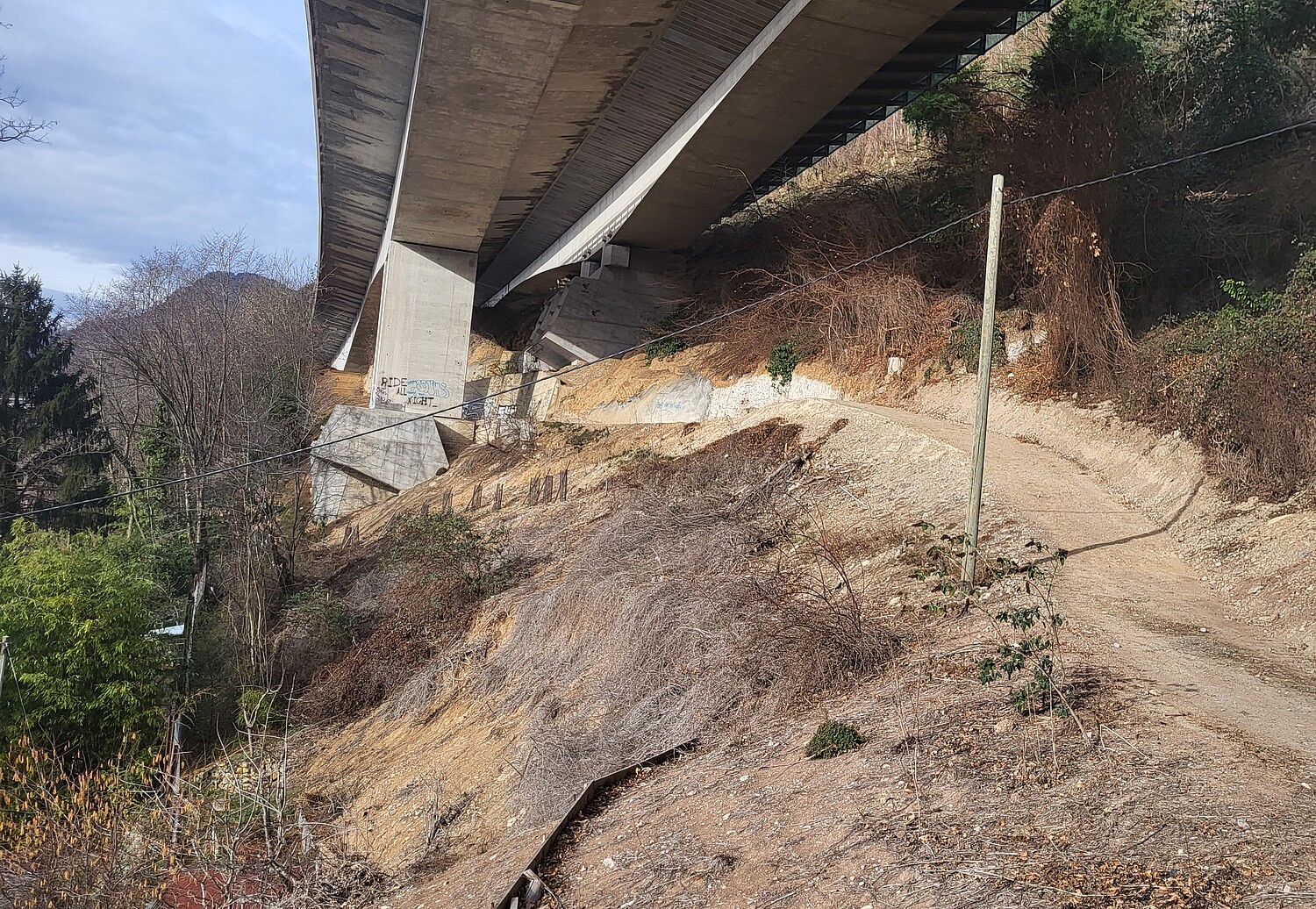
The highway viaduct in Chillon (VD) impedes forest growth beneath it by intercepting rainfall, thus undermining the forest’s protective function. To address this issue, a restoration project has been initiated to re-establish vegetation with the aid of an irrigation system. A critical challenge lies in identifying appropriate tree species and quantifying their water needs both in present and future climate conditions. This study proposes a methodology based on a simplified water balance model to project future drought conditions using a drought index. Building on this approach, irrigation requirements under future conditions were estimated. Three target thresholds for the drought index were established as irrigation benchmarks, which guide the selection of suitable tree species. If tree species adapted for the conditions anticipated outside the viaducts by 2050 are planted today, 7,290 m3/year of water would be required to irrigate the 1.35 ha site. By selecting thermophilic oak species that are adapted to the conditions expected for the end of the century, water requirements could be reduced by 22%. Despite its simplicity, this model provides a foundation for long-term forest irrigation planning. It also reveals the challenge posed by high summer irrigation coupled with potentially limited water availability, which is exacerbated by the soil’s low storage capacity. Ultimately, the study contributes to advancing discussion on forest irrigation, a new topic that raises questions in view of the climatic challenges.

Schweiz Z Forstwesen 177 (1): 25–31.https://doi.org/10.3188/szf.2026.0025